






"Ihr naht euch wieder, schwankende Gestalten,
Die früh sich einst dem trüben Blick gezeigt."
—Goethe
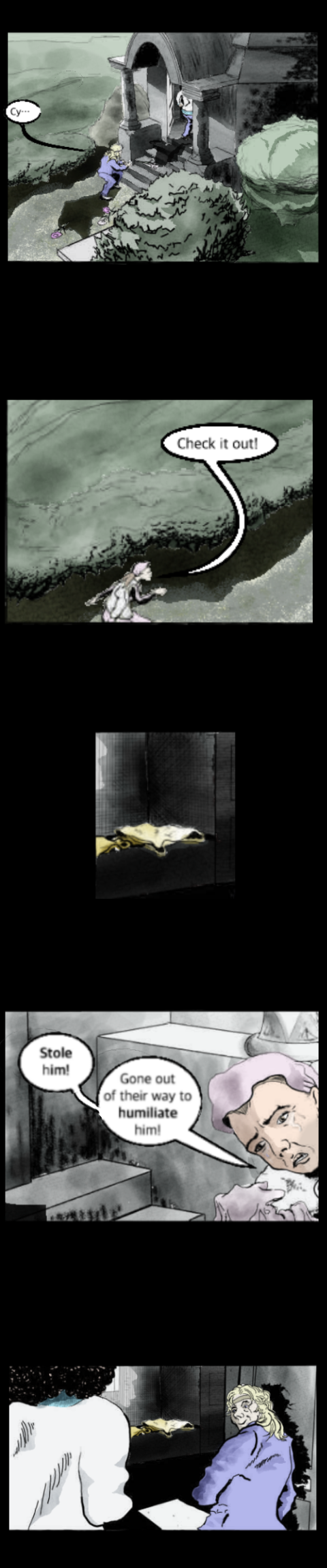
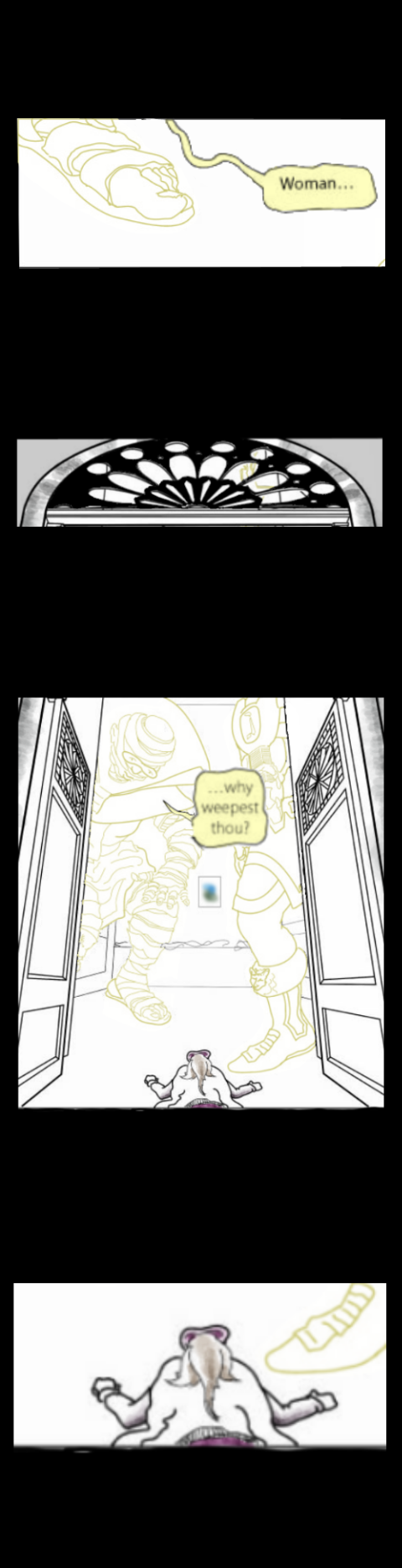
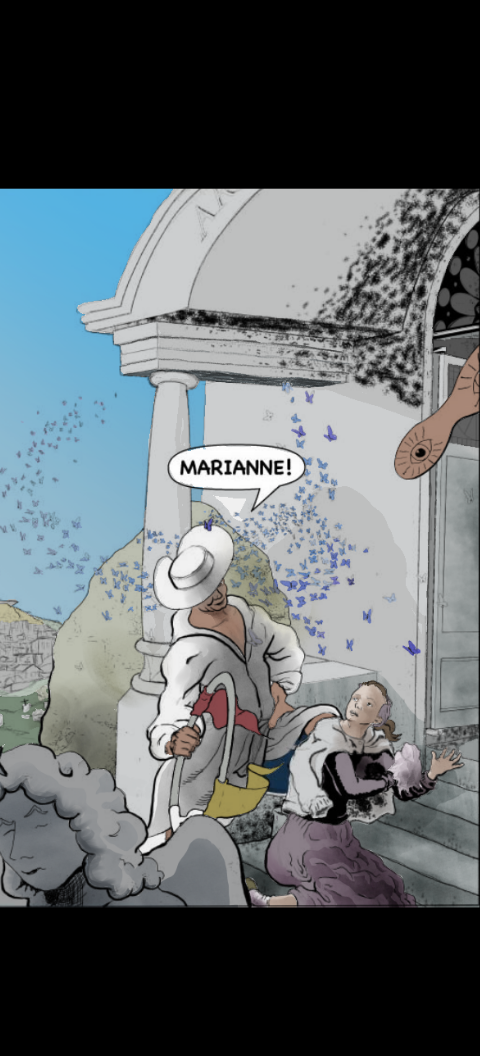
The three episodes presented communicate the concept well enough, staging an end, a beginning, and an early middle, leaving the rest to imagination.
The underlying tale is well ritualized and its outline pre-dates by centuries what many take as its canonical representations. In the motif's several transformations, incidents, places, and characterizations shifted to reflect differing regional contexts, the self-understandings of differing cults (Carrier 2014).
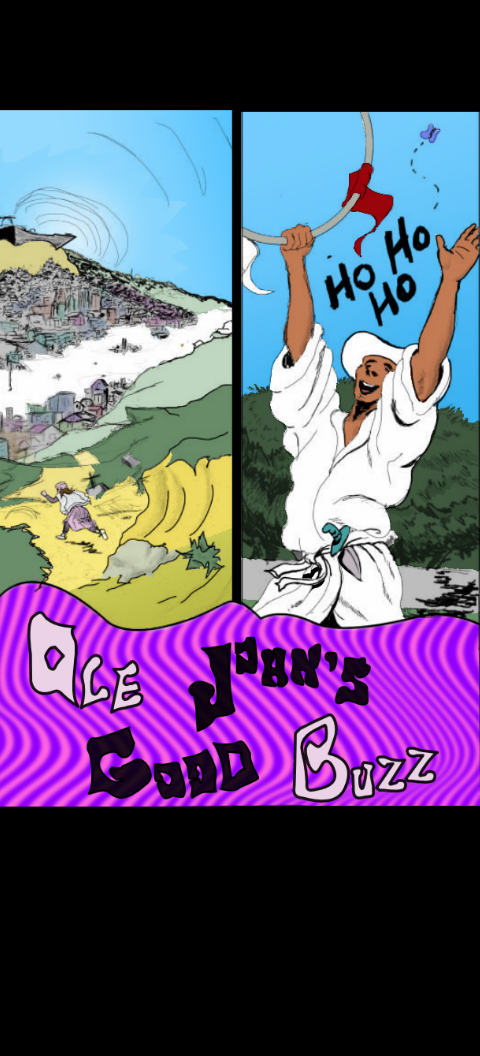
The "buzz" of the title, as we all know, is synonymous with "news." Like most of the slang, it's archaic and serves to establish the story's fanciful period.
Many pages were drawn during the Obama era, before issues of cultural appropriation became as salient as they later did. Evocata is sensitive to this, and welcomes Lakota folks to do something with Bro John's conceit that resonates better for themselves (and reflects better lived knowledge) than what's managed here.
Obviously enough, the scenes rendered here don't occur in the 21st century. Neither ours nor theirs. This project started out as a mind scape nested within a conversion/deconversion narrative involving a teenager— hence the puns and maladroit pop culture allusions that a fourteen-year-old might think amusing. In a maladroit move, these scenes came out before the frame narrative that would have made more sense of them. Hence, what you see is untimely done.
An early version was posted and put on hold, leaving several pages in episode three as suggestive sketches. The whole has been remodeled to improve how it stands on its own. Drawings got finished, color was splashed, and text retouched, taking it a step further from its source, verbally and theologically. Although evading the source text's virulent passages, this comic is well aware that it reworks an ancient anti-Semitic tract, albeit one written in its early drafts by the Evangelist most steeped in Jewish lore. This may seem odd, but its bigotry was sectarian, rather than ethnic (Boyarin 2013). The biblical text's offensive rhetoric assumed its racial overtones well after the professing church had become almost entirely gentile, the original Torah-observant Christianity having been forgotten, where not actively suppressed.
—The Editor, August 2025.